Showing posts with label Illuminati. Show all posts

Saturday, December 1, 2007

Doctoring Art Gotic Part I

Note:  This article predates Matt Smith and Peter Capaldi as the Doctor

According to the Online Etymology Dictionary the term "Doctor" entered common English usage in the early 14th century as a term for Church Fathers. The Latin term means teacher, which evolved into "religious teacher, adviser, scholar". The doct- derives from docere, "show, teach, make to appear right". In the late 14th century it became the term for the holder of the highest degree of a University and as such the term for a medicinal practitioner. The verb form, "to alter, disguise or falsify" developed late in the 18th century.

The alchemist/philosopher/theologian Raymond Lully was nicknamed Doctor Illuminatus by Duns Scotus, another important philosopher/theologian of the High Middle Ages. Scotus' code name was Doctor Subtilis for the subtle, penetrating, sophisticated manner of his reasoning.

High fantasy fictions (such as super hero comic books) are full of enlightening characters whose codenames utilize the term Doctor. And what better descriptor could there be for a degree holder and teacher of the Invisible College? I've broached the subject of the Invisible College before in my article Mercury Retrograde, and as I stated at that time, the Wikipedia description just scratches the surface of this conceptual entity. But that does not mean their description is not of interest, as is the case when Wikipedia states:

"The idea of an invisible college became influential in seventeenth century Europe, in particular, in the form of a network of savants or intellectuals exchanging ideas (by post, as it would have been understood at the time). This is an alternative model to that of the learned journal, dominant in the nineteenth century. The invisible college idea is exemplified by the network of astronomers, professors, mathematicians, and natural philosophers in 16th century Europe. Men such as Johannes Kepler, Georg Joachim Rheticus, John Dee and Tycho Brahe passed information and ideas to each other in an invisible college. One of the most common methods used to communicate was through annotations written in personal copies of books that were loaned, given, or sold from person to person".

A primary method for initiates of an Invisible College to communicate is through the use of an argotic system of symbolism, which the enigmatic 19th century alchemist Fulcanelli termed the Language of the Birds or Green Language. Fulcanelli, it should be noted, is the pseudonym of an unknown individual or individuals. The name means "Little Vulcan" and he could properly be termed Doctor Vulcan. The more common English term for argotic language is Cant which demonstrates clearly the mystical nature of a cryptolect.

Then there is Doctor John Dee, one of the most influential minds of all time. That's not hyperbole, it is more likely an understatement. Dee is closely associated to the most visible manifestation of the ancient Invisible College as described in the Wikipedia article. The surname Dee is derived from the Welsh "du" meaning black. Doctor Dee is Doctor Du is Doctor Black is Doctor Dark.

Above and beyond all the many intellectual caps Dr. Dee wore in his lifetime was his role as a Hermeticist, an occult philosophical and alchemical movement based upon the teachings of the legendary Hermes Trismegistus. Trismegistus means "Thrice Gifted" and he could just as well be called Doctor Trivia. The term Trivia derives from the Latin Trivium, which is the "place where three roads meet". These crossroads were dedicated to the Messenger god Hermes/Mercury/Thoth since ancient antiquity. Hermes Trismegistus is the legendary initiator of the occult science and philosophy that informs Doctor Dee, and as such can be viewed as the fountain head of the Underground information Stream termed the Invisible College.

Now it is my contention that super hero comic books and other forms of high fantasy fiction serve as the perfect vehicles for communication of argotic symbolism. High fantasy fiction is Romantic, it is Art Gothic, which Fulcanelli tells us is itself an inter-lingual phonetic punning term. Art Gothic is the Art Goetic and the Cant Argotic. The initiates who navigate this information stream are Argonauts. The masthead of the Argo was Athena. This is not to state that comic book creators and other fantacists purposefully embed secret symbols in their works (though some may). The beauty of the Language of the Birds lies in its subtle function, its subconscious expression, and its synchronistic manifestation.

The many Doctors and Professors of high fantasy fiction are symbolic representatives for the teachings of the ancient, prehistoric Invisible College. So should I approach this accounting chronologically? No, that would likely be impossible. At any rate, many of these illuminated Doctors defy chronology on a regular basis, sometimes as their raison d'etre. So in this article let's focus on the character who most connects the symbolic model of the Doctor as an entity beyond Time and Space. I speak of course of the protagonist and near title character of "Doctor Who", The Doctor.

I'm not nearly the Whovian I'd like to be, but I love Doctor Who. Clearly it is one of the most pertinent science fiction classics of all time. Doctor Who manages to connect to just about everything, I suppose a natural given the qualities of the character and the subject matter of the program. I'm still so amazed by the fact that Doctor Who premiered on the day John F. Kennedy died. I do feel it is worth noting the synchronicity of these events. The sacrifice of the Sun King JFK is near coincident with the opening of this corridor through Space/Time which millions of viewers have been exploring for nearly 45 years. Yes it is a fantasy, an allegory, a metaphor. But though a symbol, while abstract, it is still a portal to the most immediate Other World available to us, the Dream Time. And Who is our guide for this journey in between days. That's a statement.

The BBC program "Doctor Who" is more than just a science fiction program. It is an institution and has developed as an emblem in modern British culture. It is the Guiness World Record holder for longest running science fiction television program. The character of The Doctor has become a world-wide cultural icon, as has his time machine The TARDIS and his most prominent antagonists, the exterminating Daleks.

Amongst the most interesting characteristics of the time and space traveling Doctor is his and other Time Lords ability to regenerate. A Time Lord who suffers a mortal wound or whose physical body wears out from advance age undergoes a "genetic reshuffling" and incarnates in a new physical form that differs not just in physical appearance but in personality and characteristics as well.

This is a very interesting element of the show for a number of reasons. It is a great example of how commercial or programming concerns can incidentally derive storytelling elements with intriguing symbolic significance. The regeneration ability was not introduced to the "Doctor Who" program until it was necessary. When the original Doctor portrayer William Hartnell left the program in 1966 the producers faced the prospect of ending the series or finding another actor to portray the lead role. Rather then just ignoring the fact that the Doctor now looked and behaved differently the show's creators took advantage of their time-bending subject matter and introduced the element of Regeneration.

And so developed one of the most profound symbolic aspects of the program. The Time Lords are described as being limited to twelve reincarnations for a total of thirteen lives (though certain Time Lords have been shown to have found ways to exceed this limitation, such as the Doctor's archnemesis The Master). The significance of twelve reincarnations leading to thirteen lives is clear, the zodiacal twelve represents a complete cycle, the thirteenth life takes things full circle. Thus far the Doctor has been seen to have had ten official incarnations.
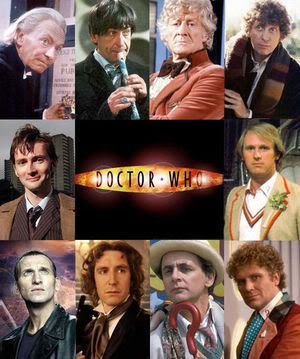
Photo Sharing and Video Hosting at Photobucket
The Ten Doctors, clockwise begining at upper left: William Hartnell, Patrick Troughton, Jon Pertwee, Tom Baker, Peter Davison, Colin Baker, Sylvester McCoy, Paul McGann, Christopher Eccleston, and David Tennant.

It is suggested at several points throughout the series that the Doctor and other Time Lords are transcendent beings, entities existing in someway on a higher temporal plane manifesting in our dimension in a corporeal form. One example of this comes during the end of the Doctor's Fourth incarnation when he encounters and is assisted by a featureless, white clad entity known as The Watcher. When the Doctor begins his regeneration into his Fifth form he and the Watcher merge.
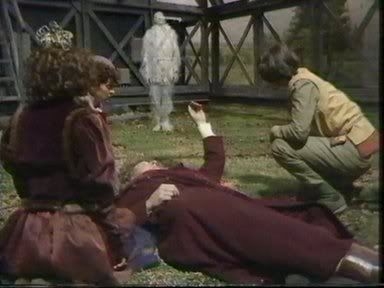
Photo Sharing and Video Hosting at Photobucket

During the Doctor's Seventh incarnation he appears to share many traits with his previous lives such as the whimsy of the Second and Fourth Doctors and the scientific brilliance of the First and Third. But as the storyline of the Seventh Doctor developed it could be seen that beneath the surface he was an entity akin to a demigod, dedicated to destroying evil at all costs. Indeed I think it is quite clear that the Time Lords are a sort of science fiction angel, not unlike the Ainu of Tolkien's Middle Earth mythology. Further, the Doctor is a rebel Time Lord with a pronounced sense of justice which causes him to disregard Time Lord policies and take direct action with time and space for the benefit of humankind and other sentient lifeforms. This clearly makes the Doctor a Promethean figure. According to the Master, the Doctor took on his pseudonym (his true name has never been revealed) to denote himself as "the man who makes people better".

The Doctor's time machine, the TARDIS (Time And Relative Dimension In Space) is said to locked in its iconic shape of a Blue British police box due to a faulty Chameleon Circuit. The phone booth sized exterior opens to a labyrinth complex because a TARDIS is "dimensionally transcendent", its interior occupying a pocket dimension separate from the exterior. Interestingly, one of the elements the TARDIS needs to function is mercury. True Whovians should check out the fan made "TARDIS Manual" by A. B. Roberts.

As stated near the beginning of this article, Doctor Who manages to connect to a wide array of diverse cultural elements. Within the context of the story, for example, is a future or alternate reality version of the Doctor who goes by the name Merlin. As for the program itself, past episode writers for the series include author Douglas Adams who not only brought us the life, the universe and everything solving "Hitchhiker's Guide to the Galaxy" series but also "Dirk Gently's Holistic Detective Agency" and its sequel "The Long, Dark Tea-Time of the Soul". Not very weird considering the nature of Adams' reality bending works, right? Well then, how about Henry Lincoln? Lincoln is perhaps best known as coauthor of "Holy Blood, Holy Grail"* and he continues to investigate the mysteries of Rennes-le-Chateau to this day.

Then there is the Doctor's slim but existent connection to the universe of Marvel Comics. As one would expect with a program with the longevity and level of fandom of "Doctor Who" there arose many spin-offs and presentations in other media including numerous novels, radio programs and "Doctor Who Magazine". The magazine, still in publication, began in 1979 as "Doctor Who Weekly" and was initially published by Marvel UK. Included in the magazine's features were short comic book adventures. Amongst the creators of the Doctor's comics were Alan Moore and Dave Gibbons the writer/artist team who brought us "Watchmen". Another artist on "Doctor Who Weekly" was David Lloyd, who was also the artist on Moore's "V for Vendetta".

Lloyd was working on the Doctor Who comics with Moore when the Special Executive was introduced. The Special Executive is a band of time-traveling mercenaries, and several members of the group are native to the Doctor's home planet of Gallifrey. Later Alan Moore worked on Marvel UK's Captain Britain serial with illustrator Alan Davis (the two Alans would collaborate again on Marvelman/Miracleman), and Moore reintroduced the Special Executive to Captain Britain's adventures.
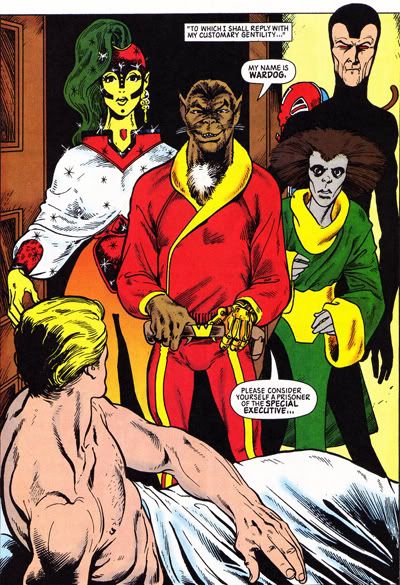
Photo Sharing and Video Hosting at Photobucket
Art by Alan Davis

Moore came to grow dissatisfied (quite rightly) with Marvel's treatment of creative talent, ceased working for the company and refused permission for them to utilize the Special Executive. So Alan Davis then developed the similar and related band known as the Technet for use in the Captain Britain stories. Later Alan Davis teamed with long-time X-Men writer Chris Claremont on the X-Men spin-off "Excalibur" with a team that included Captain Britain. The Technet followed the Captain to the title.
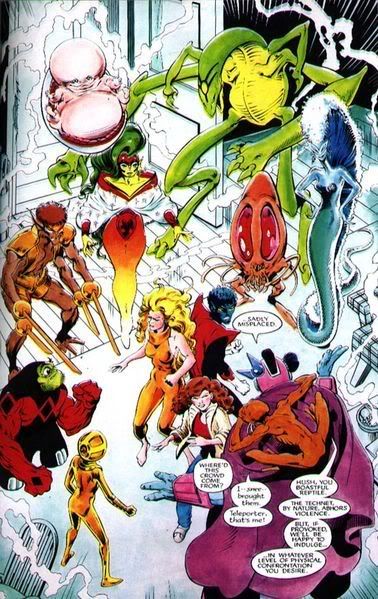
Photo Sharing and Video Hosting at Photobucket
Art by Alan Davis

This creates an interesting phenomenon that is again the result of commercial decisions and concerns. More than once Marvel has done adaptations such as "Doctor Who" and allowed the characters and concepts to coexist in the shared universe of their super hero titles. This plastic feature of Marvel comes up in "Doctoring Art Gotic" Part II where I'll examine some of the Doctors and Professors of the Marvel Universe.

Want one more wild Doctor Who connection before we close Part I? In 1988 "The Illuminatus! Trilogy" inspired, discordian acid house band The KLF (aka the JAMs, the Justified Ancients of Mu Mu), under the name The Timelords released "Doctorin' the Tardis", combining Dalek voice overs with the Doctor Who theme and Gary Glitter's "Rock and Roll(Part Two)". It reached #1 on the UK charts:


Note, this is not the original video, but a fan creation utilizing clips from recent seasons of "Doctor Who". Any nostalgic fans of really low-budget discordian absurdism can see the original here.

And things just aren't complete without a Dog around lately. If you watched the video you may have spotted the Doctor's longest running companion, the robotic K-9. Because travelers should have a Dog, just ask Dorothy Gale.

Photo Sharing and Video Hosting at Photobucket

*You may have already heard that "Holy Blood, Holy Grail" coauthor Richard Leigh passed away on November 21st of this year at the age of 64 due to complications of a heart condition.

Friday, November 16, 2007

Bill Luminati

Early in his career, actor/comedian Bill Murray was the voice actor who portrayed the Promethean Human Torch on the "The Fantastic Four Radio Show". At first I thought this was just a funny item of trivia. But further consideration, and a review of Murray's career, has shown me that this connection between Murray-Prometheus-The Human Torch is a matter of great synchronistic significance. Let's take a look at the works of Mr. Murray.

To begin, here's an audio clip of Murray on "Saturday Night Live" as lounge singer Nick Winters, singing an ode to our most prominent modern depiction of the War of the Heavens:

Nick Winters "Star Wars"

Murray's first screen role was as camp counselor Tripper Harrison in "Meatballs". In the film Tripper nicknames Chris Makepeace's character Rudy Geller, "Wudy da Wabbit", a play on Elmer Fudd's "Wascally Wabbit" in reference to Bugs Bunny. Some of you may be aware of author Robert Anton Wilson's account of Bavarian Illuminati founder Adam Weishaupt's vision of a Lovecraftian Shoggoth as a rabbit, which Weishaupt called "Der Hexen Hase", "the Witches Rabbit". This term is said to be punningly preserved in the Bugs Bunny cartoons by the phrase "Wascally Wabbit".

As we shall see this is not the only connection between Murray and the Shoggoth/Phooka lunar cross-dressing trickster Bugs Bunny. In the 1980 comedy classic "Caddyshack" Murray plays golf course grounds keeper Carl Spackler, who spends the bulk of the movie matching wits with a gopher in a manner that clearly is a tribute to the antagonism of Elmer Fudd and Bugs Bunny. Murray also interacts with a rodent highly similar to a gopher in what may be his most significant role, as we see later in this post.

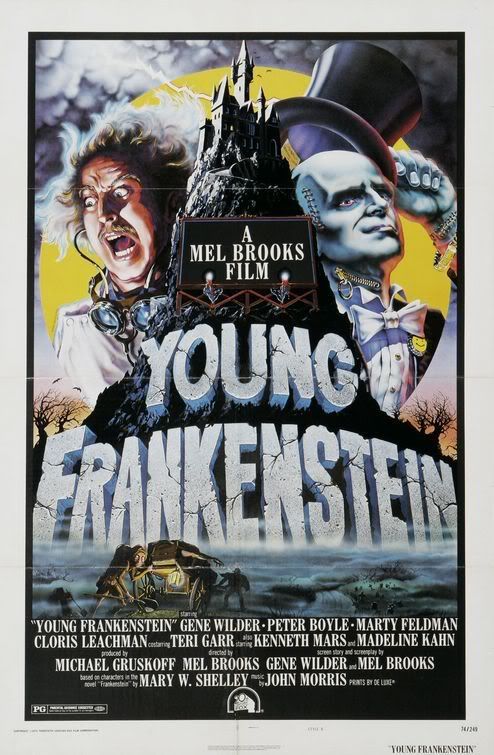
In between "Meatballs" and "Caddyshack" Murray starred in "Where The Buffalo Roam" as Gonzo journalist Hunter S. Thompson. The film costarred Peter Boyle as Thompson's friend and attorney Carl Lazlo. Peter Boyle is himself resonant of Prometheus due to his portrayal of Frankenstein's Monster in Mel Brooks' 1974 comedy "Young Frankenstein".

Photo Sharing and Video Hosting at Photobucket

In 1981 Bill Murray played John Winger, a New York City cab driver who discovers his true nature as a leader and guide after he joins the Army in the comedy "Stripes".  Murray was propelled to super-star celebrity status after starring in the paranormal comedy "Ghostbusters" in 1984, the top-grossing movie of that year. In this Columbia Pictures production, Murray starred as Dr. Peter Venkman, one of three parapsychologists who form the Ghostbusters business after being fired from New York City's Columbia University.

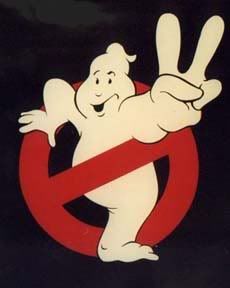
The logo for the Ghostbusters can be read as a diagonal bar blocking a ghost from emerging through a circular portal.

Photo Sharing and Video Hosting at Photobucket

In the movie Dr. Venkman and his companions attempt to stop the fictional Mesopotamian demigod Gozer from invading New York City from a supernatural dimension. Gozer's means of opening its portal are two dog/bear-like servants, the male Vinz Clotho, the Key Master, and the female Zuul, the Gatekeeper. Vinz Clotho and Zuul possess two residents of 55 Central Park West, which in the film is described as being designed as a supernatural antenna by an insane surgeon who belonged to a secret society dedicated to the worship of Gozer.

Murry's "Ghostbusters" costars Dan Aykroyd and Harold Ramis also wrote the script for the film. Originally Aykroyd intended the Peter Venkman role for his fellow "Blues Brother" John Belushi. Belushi, however, died of a drug overdose while the script was being developed. The first supernatural entity the Ghostbusters successfully capture, the entity that would come to be called "Slimer", was an homage to Belushi. Slimer was described in the original script as "The Onion Head Ghost". The version of "Ghostbusters" that reached the screen was far scaled down from Aykroyd's original concept, which involved the Ghostbuster team traveling through time, space and dimensions battling giant ghosts. Instead of the rifle-like "Proton Projectors" the Ghostbusters were originally intended to each wield a pair of wands.

Things get even more interesting five years later when Murray reprised his role as Venkman in the sequel "Ghostbusters II". Notice that the modified Ghostbusters logo utilized for the sequel features the spirit form happy and more fully emerged through the circular portal. It also holds up two fingers in the yonic "V for Victory" sign.

Photo Sharing and Video Hosting at Photobucket

In the film the Ghostbusters reunite to battle the menace of the spirit of fictional 16th century Moldavian ruler and necromancer Vigo the Carpathian. Vigo's supernatural plot involves an emotionally reactive slime that produces psychokinetic movement in inanimate objects. The Ghostbusters discover a river of this slime in the abandoned Beach Pneumatic Transit tunnels. This detail combines the esoteric symbolism of the subway with the major occult emblem of the Underground Stream.

At one point in the film the Ghostbusters battle the spirits of the Scoleri Brothers, who are visually based on Aykroyd and Belushi's Blues Brothers characters. The film also contains a reference to artist Thomas Gainsborough's famous 1770 painting "The Blue Boy".

Clearly the most overt esoteric moment for our Human Torch resonator comes towards the climax of the movie when the Ghostbusters use the psychokinetic slime to animate the Statue of Liberty, Columbia herself. This animation is achieved by playing the slime's "favorite song", the 1967 Jackie Wilson Rhythm and Blues classic "Higher and Higher".


In recent years Bill Murray has gained attention for his ability as a dramatic actor. His first non-comedic role came in 1984, just after the first Ghostbusters movie. In fact, Murray agreed to the role in the big-budget blockbuster as part of a deal with Columbia Pictures to get the remake of "The Razor's Edge" produced. Based upon the 1944 W. Somerset Maugham novel, Murray played Larry Darrell, who was portrayed by Tyrone Power in the 1946 film version of the story. Put simply, "The Razor's Edge" is about a man traumatized during his service in the first World War who travels to India seeking enlightenment then returns to the United States to live a simple life revoking the goal of material attainment. In the novel Maugham includes himself as a minor character, a metafictional detail. In the 1984 version the locale of India is replaced with Tibet.

Another literary adaption starring Murray came in 1988's "Scrooged", a modernized version of Charles Dickens' classic "A Christmas Carol". Murray played a TV executive with the evocative name Francis Xavier Cross. This combination is also found in the X-Men comic books character Charles Francis Xavier (the X of the X-Men being a equi-armed cross tilted 45 degrees). Both character names are suggestive of occult philosopher Francis Bacon, and also to St. Francis Xavier, co-founder of the controversial Jesuit Order.

Bill Murray made a cameo appearance as a masochistic dental patient in the 1986 "Little Shop of Horrors", a film adaptation of the Broadway musical comedy which was itself an adaptation of a 1960 Roger Corman comedy film. "Little Shop of Horrors" is the story of a vampiric Venus fly trap from outer space that arrives on Earth during a solar eclipse (an indication of planetary alignment). It was directed by puppeteer/actor/director Frank Oz and filmed on the 007 Stage in England. An alternate ending cut from the film features the killer Venus fly trap perched upon the head of the Statue of Liberty.

Photo Sharing and Video Hosting at Photobucket

In 1991 Murray played Bob Wiley in "What About Bob?". Bob is a heavily phobic, child-like patient whose antics and simple nature ultimately heal and unite the dysfunctional family of his therapist. The story is a clear example of the symbol of the wise-fool who stumbles upon enlightenment.

Bill Murray's next role was in the classic 1993 film "Groundhog Day". Murray played weather man Phil Connors who goes to Puxsutawney, Pennsylvania to cover the February 2nd Groundhog Day event. Phil, who shares his name with the oracular groundhog "Puxsutawney Phil", comes to find that he is stuck in a time loop. Rather then moving on to February 3rd he instead repeats the events of February 2nd over and over again. Phil alone seems aware of this cycle and is able to freely control his behavior. After several iterations he kidnaps the groundhog and the two Phils die in a fiery car crash. But death does not break the cycle and Phil Connors awakens once again on the morning of February 2nd. Several suicide attempts also fail to break the pattern. Eventually Phil starts engaging in a process of self-improvement, training himself to be a proficient piano player and learning every detail of the life stories of everyone in the town. But the time loop persists until Phil is able to honestly and sincerely allow himself to love the character played by Andie MacDowell. Once this happens Phil finally awakens on the morning of February 3rd.

This may be the most significant role of Bill Murrays' career. The movie's title has entered the language as a reference to a ceaselessly repeating cycle, even outside the United States (the only nation with a Groundhog Day). It's message of self-betterment as a means of escaping monotonous routine has caused it to be hailed by religious leaders of many faiths. Some have even called it "the most spiritual film of our time". While it is not made clear in the movie, the original script described the repetition as occurring over tens of thousands of years. Quite clearly this story relates to the process of enlightenment, or spiritual transcendence and is emblematic of Eastern concepts of the cycles of reincarnation.

And esoteric details continue to proliferate in Murray's film roles. In "Mad Dog and Glory" (costarring Robert Di Nero and Uma Thurman) he played mob boss Frank Milo, a self-described "expediter of dreams".  In "Ed Wood" he portrayed real life B-movie actor Bunny Breckenridge, a name that could be read as a synchronistic reference again to Bugs Bunny.

Bugs Bunny and Bill Murray come into direct contact with one another in the 1996 movie "Space Jam" (a title that, like Star Wars, essentially translates to War in Heaven). Murray plays himself in the film and is present on the golf course when Bugs Bunny and Daffy Duck travel through a magical portal that leads to "Loony Tune Land". They come to recruit Michael Jordan for a basketball game against the alien "Monstars". The Monstars enhance themselves by stealing the basket ball prowess of several professional players, taking from them the qualities that give the players their enhanced or special natures. The stakes for the Loony Tunes is enslavement in the outer space theme park "Moron Mountain". Later Bill Murray arrives in Loony Tune Land through undisclosed means (apparently he can travel through magical portals to cartoon realities) and participates in the B-Ball game with Bugs Bunny, Jordan and other Loony Tunes characters.
In the Wes Anderson movie "Rushmore" Murray is seen as Harold Blume, a business man who comes in competition with the extracurricular activity loving high school student Max Fischer for the affections of a teacher with the intriguing name Rosemary Cross. In the modernized Shakespeare classic "Hamlet 2000" Murray played Polonius, the character who utters the message "To thine own self be true".
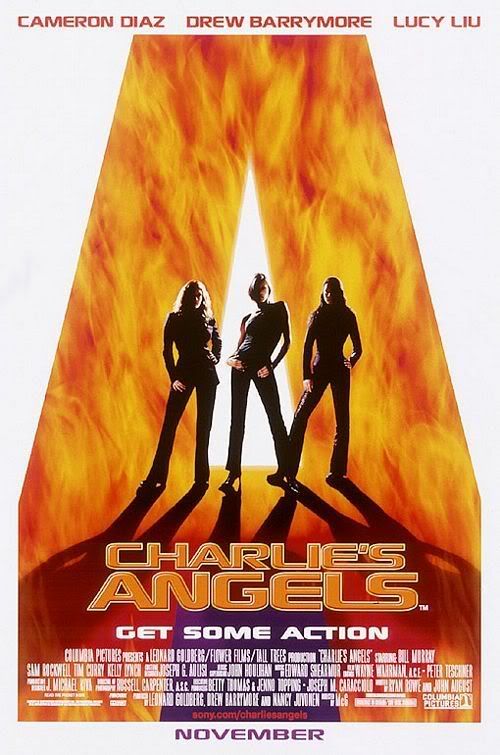
Also in 2000, Murray was featured in the film adaptation of "Charlie's Angels". He played John Bosley, the only employee of the Townsend Detective Agency who ever lays eyes on boss Charlie. Seeing as Angels are the agents and messengers of God this is an important detail. Bosley is essentially Charlie's Gabriel or Metatron. Note the fiery, great pyramidal "A" of the movie's poster.

Photo Sharing and Video Hosting at Photobucket

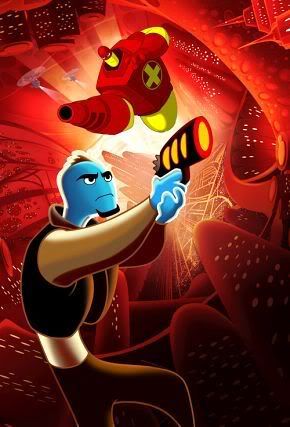
The next year Murray went from being the voice of God to being God himself, in the mixed live action/animated feature "Osmosis Jones". In the film Murray played Frank, a Zoo Keeper who is unaware of the complex civilization of anthropomorphic cells, viruses and chemicals living inside him. This movie also featured Laurence "Morpheus" Fishburne as the voice of the virus Thrax, the Red Death, which is a nod to the famous tale by Edgar Allen Poe. Chris Rock voiced the heroic white blood cell title character Osmosis Jones.

Photo Sharing and Video Hosting at Photobucket

In 2001 Murray was also seen in Wes Anderson's "The Royal Tenenbaums" in the role of Dr. Raleigh St.Clair. Dr. St.Clair is a neurologist clearly based on Dr. Oliver Sacks, the author of the non-fictional "Awakenings" and inspiration for the fictional movie of the same name. I discuss Dr. Sacks' work in my article The Chemicals Between Us. The name "Tenenbaum", Ten In Baum (tree) can easily be read as a reference to the ten sephiroths of the Kabalistic Tree of Life. Note the name is close to but not quite the word for Christmas Tree in the German carol "O Tannanbaum".

Perhaps the greatest critical acclaim for Bill Murray as a dramatic actor came in response to his role in the Sofia Coppola film "Lost In Translation". Murray played a washed up, world weary actor in a loveless, long-distance marriage experiencing culture shock in Tokyo where he is filming commercials. He meets Charlotte, played by Scarlet Johansson, and the two engage in an unconsummated romance. The relationship brings out the better aspects of both characters. At the end of the movie Murray's character leaves Tokyo. He and Charlotte exchange a kiss and he whispers something in her ear that the audience is not made privy to. This moment was unscripted, meaning it was improvised like many of Murray's lines of dialog throughout his career. Whatever was whispered was something Murray himself composed. According to the British program "The Culture Show", which used audio enhancing equipment to analyze the scene, the "lost whisper" was "I love you. Don't forget to always tell the truth". In "Lost In Translation" Murray's character finds his better self through his friendship with Charlotte while he's living in Japan. This is the same model seen in "The Razor's Edge", with the spiritual enlightenment personified by Johansson's character.

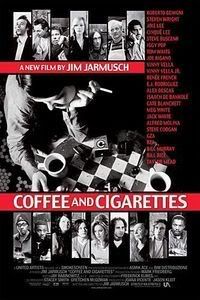
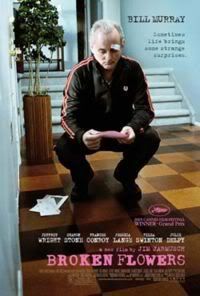
Bill Murray appears in a pair of films by director Jim Jarmusch. As a waiter in the 2003 movie "Coffee and Cigarettes", and in 2005's "Broken Flowers" as a womanizer who receives an unsigned note from a former girlfriend which informs him he has a 19 year old son. Both films make heavy use of the checkerboard pattern of Masonic initiation and Pythagorean Sacred Geometry.

Photo Sharing and Video Hosting at Photobucket

Photo Sharing and Video Hosting at Photobucket

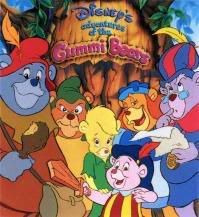
In the late 80s the success of the Ghostbusters franchise led to an animated television program called "The Real Ghostbusters". In the first three seasons of the cartoon the voice of Peter Venkman was provided by Lorenzo Music. Some may best recall Music's voice work as the unseen character Carlton the Door Man in the sitcom "Rhoda". He also provided the voice for Tummi Gummi in the NBC Saturday morning cartoon "Disney's Adventures of the Gummi Bears".

Photo Sharing and Video Hosting at Photobucket

Music was also the voice for many years of animated versions of Jim Davis' Garfield character. Reportedly, Music was removed from the cast of "The Real Ghostbusters" due to a complaint by Bill Murray that Venkman sounded too much like Garfield. This is ironic as Murray provided the voice for the cartoon feline in 2004's "Garfield: The Movie" and its 2006 sequel "Garfield: A Tail of Two Kitties" (a takeoff of Mark Twain's "The Prince and the Pauper" with a title that's a play on Dickens' "A Tale of Two Cities").

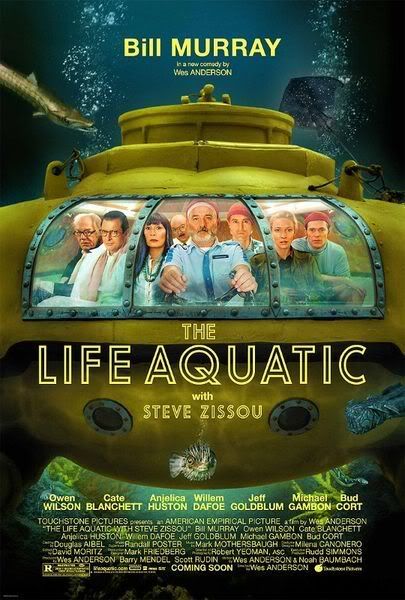
Bill Murray's third film with director Wes Anderson was 2004's "The Life Aquatic with Steve Zissou" in which Murray played the title role. A parody/tribute to oceanographer Jacques Cousteau, the part interestingly makes Murray a Submariner. Steve Zissou is on a Captain Ahab type quest to find a rare "Jaguar" shark that ate his friend. Finding his better nature through the process of his quest, Zissou opts to not slay the creature when he finally locates it (plus he's out of dynamite). When Zissou and crew locate the shark they do so in a Yellow Submarine.

Photo Sharing and Video Hosting at Photobucket

Which of course references the song and film by the Beatles. The Yellow Submarine is also found in Robert Shea and Robert Anton Wilson's "The Illuminatus! Trilogy" as the vehicle of Hagbard Celine and his crew of Virgo Discordians.

There was talk of plans for "Ghostbusters III: Hellbent", which would be a CGI cartoon rather then live action (in part due to Murray's unusual refusal to act in the third installment of anything). In the story the Ghostbusters find themselves in a Manhattan-like Hell (or Hell-like Manhattan), ruled by Luke Sifler (Lucifer) and populated by red and green demons and Blue minotaurs.

I never would have guessed it before taking a closer look, but Bill Murray's connection to the Prometheus figure via the Human Torch is wholly appropriate. Nearly every one of the films of his 30 plus year career involves enhanced or special natures, the process of enlightenment or allusions to divinity.

To thine own self be true.  Always tell the truth.  We came, we saw, we kicked its ass!